top of page

Writing

News stories, blog posts and technical guidance on beneficial ownership transparency, data and standardisation

Introducing OpenCheck: customer due diligence checks powered by the Legal Entity Identifier, open data and open standards

OpenCheck is a project to show how to do customer due diligence risk checks powered by the Legal Entity Identifier (LEI), open data and open standards including the Beneficial Ownership Data Standard (BODS)

Creating user-friendly web forms to collect data in line with the Beneficial Ownership Data Standard

Beneficial ownership data should be easy to submit as well as to use

Why transforming beneficial ownership data into linked data formats matters for AI — and for tackling financial crime

For a human investigator, tracing that chain is already hard work. For an AI system trying to reason over it, the challenge is even more fundamental: how do you make the machine understand what the data means?

Transforming standardised beneficial ownership data into usable formats

Beneficial ownership data should be easy to use once you have been given access to it

The EU is aligning beneficial ownership data formats — but without a data standard, harmonisation will fall short

The Beneficial Ownership Data Standard should be recommended instead

Control access, standardise data

Today it is difficult both to access and to understand beneficial ownership data. To achieve anti-corruption goals on ending anonymous ownership, we need to either solve the access problem or the data problem

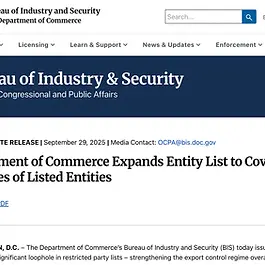
Why the BIS Affiliates Rule makes better beneficial ownership data a trade compliance necessity

From 10 November 2026, compliance teams will be responsible for understanding any entities owned more than 50% by companies submit to US export controls

If Europe wants to buy European, it needs to see through shell companies

Europe can’t operationalise “Buy European” (or any serious procurement de-risking agenda) without better beneficial ownership data

Standardising ownership data on foreign companies and trusts buying real estate in the European Union

Why the EU needs to do more to harmonise data to achieve the goals of the EU AML package

“EU Inc”: creating a single set of rules for a new type of European businesses

What could a drive for a single set of rules for companies across Europe mean for company registration, identifier issuance, beneficial ownership transparency and anti-money laundering trends across the EU in coming years?

How a collaboration between Open Ownership and GLEIF promote greater transparency in corporate ownership and control

Improving screening processes and enhance support for anti-money laundering (AML), counter-terrorist financing (CTF), customer due diligence and sanctions enforcement efforts globally

Standardising UBO data to store trustworthy, high-quality beneficial ownership information in business wallets

Exploring how the Beneficial Ownership Data Standard offers value to those who want to model or experiment with storing high-quality and understandable beneficial ownership data in business wallets

Using the UK’s public company and beneficial ownership data to power open source intelligence investigations

Recent stories and investigations published by UK media outlets have stressed the value of doing as much as possible to understand and spot how a number of the UK’s five million registered companies are being used and abused

Making beneficial ownership data public, making sure it is used and realising its value

What we can learn from the example of the United Kingdom which has made its beneficial ownership data publicly and openly available for nearly the last decade? How many people use that data? How much value does it generate? How can it be used more in future?

Challenges in realising the goal of the EU’s Beneficial Ownership Registers Interconnection System

The European Union wants to give people with legitimate interest "immediate, unfiltered, direct and free access to beneficial ownership information" from across Europe using its BORIS platform. Is this goal achievable?

How the Beneficial Ownership Data Standard can help to share information on corporate structures

Requesting information on how companies are owned or controlled by people or other companies is a crucial part of onboarding processes as well as supporting know your customer and due diligence checks.

Spotting red flags in beneficial ownership datasets

Demonstrating how high-quality beneficial ownership data can support anti-money laundering investigations by highlighting risk factors which data users want to spot

Partnering with registry software companies to spread usage of the Beneficial Ownership Data Standard

Foster Moore and NRD Companies partnered with Open Ownership to spread usage of the Beneficial Ownership Data Standard across the globe

Defining and capturing data on the ownership and control of state-owned enterprises

Exploring what information is needed on the corporate governance of state-owned enterprises to support transparency efforts

Connecting beneficial ownership, PEPs and sanctions data with OpenScreening

Millions of open data records can now be explored using a tool to help uncover hidden relationships between beneficial owners, politicians, sanction targets, and networks of companies

How to capture information on nominees in beneficial ownership data

In order to capture high-quality beneficial ownership data, it is necessary to capture information on both the nominees and the nominators as well as the entity to which they are linked

Spotting risks by combining beneficial ownership, public procurement and sanctions data

Combining high-quality beneficial ownership data with other datasets to help detect potential risks during customer due diligence, know your customer checks and sanctions screening processes

Using reliable identifiers for corporate vehicles in beneficial ownership data

Understand how reliable identifiers facilitate the connection of datasets such as disclosures on politically exposed persons, stock exchange filings and licence registers

Developing the world's first transnational open beneficial ownership register

A brief history of the Open Ownership Register which helped users search and explore data from Armenia, Denmark, Slovakia, Ukraine, and the United Kingdom

Master complex UBO investigations with advanced graph technology

How to unlock complex ultimate beneficial ownership investigations using graph technology and data produced in line with the Beneficial Ownership Data Standard

An open solution for interoperability: The launch of version 0.4 of the Beneficial Ownership Data Standard

Version 0.4 of the Beneficial Ownership Data Standard introduces new features to capture high-quality data on how beneficial ownership relationships change over time, how to represent declarations and how to separate core data from metadata within statements

bottom of page